
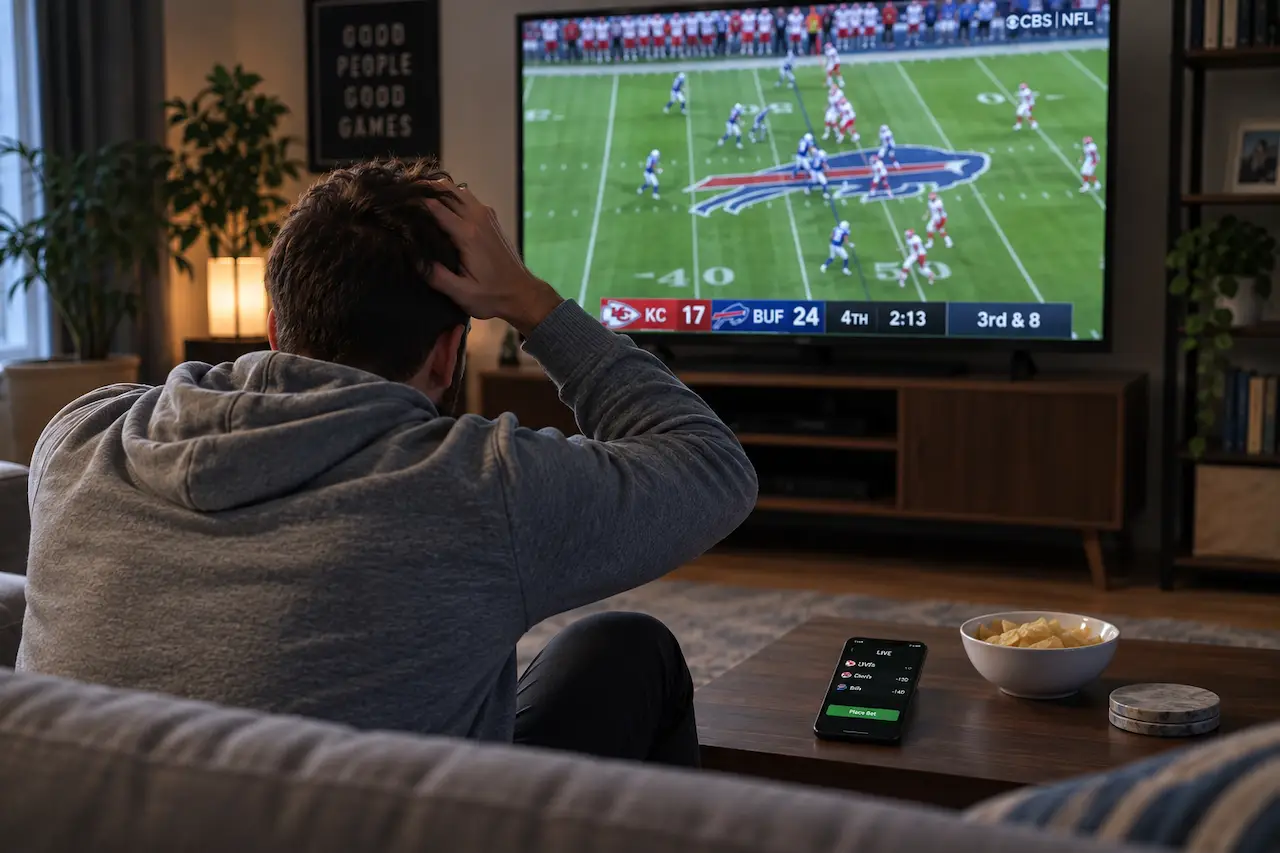
We spend a lot of time at Parents Standing Together teaching parents what gambling harm can look like.
Pay attention when your child seems preoccupied with gambling. Notice when betting begins to interfere with everyday life. Be concerned when they have action on everything. Watch for anxiety, stress, secrecy, chasing, and an inability to disengage. Don’t normalize excessive gambling. Don’t fund it. Don’t enable it. Don’t treat concerning behavior as just something young people do.
Then we watched a new Underdog ad. (click to see it)
And somehow, nearly everything we teach parents to recognize as a possible warning sign has been turned into a joke.
“He’s got action on every game.”
The young man in the commercial reads as very young — young enough that a viewer could reasonably wonder whether he’s old enough to place these bets at all. He lives at home with his mother and is so absorbed in what is happening on his phone that he can’t even get up to answer the door.
The “dog”—representing the gambling app—comes into the house and asks his mother, “How’s our boy?”
Our boy.
That language alone is unsettling. The gambling product isn’t portrayed as a tool this young man occasionally uses for entertainment. It is a character in his life. It knows him. It cares about him. It belongs in his home.
And Mom invites it in.
Then she casually explains that her son has “action on every game.”
Parents in our community caught that line immediately. One mother who has lived through her son’s gambling addiction put it plainly: “Having action on every game is exactly the kind of behavior families should be concerned about—not something a gambling company should be making look normal.”
She’s right. Having action on every game isn’t necessary to enjoy sports, and it isn’t something parents should be taught to shrug at. Yet here, Mom delivers the line as though she’s telling someone what her son had for lunch.
That is normalization in action.
Mom doesn’t recognize the warning signs. She helps feed them.
The mother’s role in this commercial may be one of its most troubling elements.
She sees her son unable to pull himself away from his phone. She knows he is betting across games. She sees this gambling “dog” as a normal presence in their home.
And then she asks whether he has eaten.
The imagery is almost too perfect: Mom is literally asking whether she should feed the dog.
For parents who have lived through a child’s gambling addiction, “feeding” the problem isn’t funny. It is something many families learn about the hardest possible way—one transfer at a time, one crisis at a time, always with the best intentions, but never making it better.
Parents come to us asking a version of the same question: Am I helping my child, or am I helping the gambling continue?
We spend a lot of time on that difference. Parents do not have to finance, facilitate, cover for, or normalize harmful gambling. Sometimes loving your child means refusing to make the next bet easier.
Yet in this commercial, the parent is presented as completely comfortable with it all. Her son’s gambling isn’t a warning sign. It’s just part of the household.
“Breathe. I love you.”
Meanwhile, the young man doesn’t look like he’s having much fun. He looks worried. He looks stressed. He is fixated on what is happening.
And that’s when the dog reassures him: “Breathe. I love you.”
For several parents in our community, this was the moment that hit hardest.
There is something profoundly uncomfortable about a gambling product being personified as a source of comfort, reassurance, and affection at the very moment the gambling appears to be causing distress. The gambling makes you anxious, and then the gambling tells you it loves you.
One parent described the message this way: “Using affection and validation as the punchline is not funny.”
Another asked the obvious question nobody in the ad asks: Is it really enjoyable to watch a game while feeling like you want to throw up?
Because in the version of this ad promoting prediction markets, the young man says, “I almost threw up on the rug.”
The dog’s response? “That’s what it’s there for.”
That’s the joke. But nausea, intense anxiety, and emotional distress surrounding a wager aren’t particularly funny to families who have watched gambling consume someone they love.If gambling is making you feel physically sick, the useful response probably isn’t reassurance that everything is fine. It’s a question about whether this is still entertainment.
The gambling gets the whole commercial. The help gets the fine print.
There is one more piece of this that is hard to ignore.
In the Daily Fantasy Sports version, responsible gambling helpline information does appear — in tiny print running across the bottom of the screen.
Think about that contrast. The young man’s gambling is front and center. His preoccupation is part of the story. “Action on every game” gets a laugh. His stress is part of the joke. The gambling app gets an actual personality, walks into his home, comforts him, and tells him it loves him.
And the information about where to turn if gambling is becoming a problem is the tiny print at the bottom of the screen.
Then there’s the prediction-market version. The young man is so stressed by what’s happening that he says he almost threw up. Instead of gambling helpline information across the bottom, viewers get regulatory disclosures about prediction markets at the end.
Because prediction markets aren’t gambling. Right?
Whatever legal or regulatory distinction is made, a young person watching these ads sees the same thing either way: putting money on an uncertain outcome, becoming intensely invested in it, and feeling awful while waiting to find out. If someone recognizes himself in that, the classification probably doesn’t matter much to him. What matters is whether anyone tells him that what he’s feeling could be a sign of harm.
When warning signs become punchlines, they become normal
The problem isn’t that a gambling company made an advertisement showing someone gambling. And it isn’t that every person who bets frequently has a gambling disorder. A single behavior doesn’t diagnose addiction.
The problem is that behaviors families are being taught to recognize as potential signs of gambling harm are repeatedly reframed here as quirky, funny, and relatable.
Preoccupation is funny. Not being able to put the phone down is funny. Action on every game is normal. Anxiety over the outcome is part of the excitement. Feeling like you might throw up is the punchline. A parent casually accepting all of it is just family life.
And the product causing the stress? Don’t worry. It loves you.
Of course not everyone who bets will develop a gambling problem. But that’s not the point. Prevention means paying attention before a problem becomes a crisis. When gambling harm signs begin, those are behaviors worth noticing. Parents shouldn’t be taught to laugh them off as just part of being a sports fan. They should be taught to recognize them, ask questions, and pay attention to the pattern.
What are parents supposed to tell their kids?
Parents are already competing with an enormous cultural shift.
Betting products live on the same phones young people use to text friends, watch videos, check scores, and do homework. There’s no longer a trip to a casino or sportsbook creating a physical boundary between everyday life and gambling. As one parent in our community said, “It is not a trip to a casino anymore; it is in their pocket 24/7.”
At the same time, parents are told to talk to their children about gambling risk, recognize warning signs early, and intervene before things reach a crisis.
Then the family sits down to watch a college football game on a Saturday afternoon and sees an ad telling them the exact behaviors they’re supposed to worry about are hilarious.
One grandmother in our community described growing up watching sports and treasuring those memories with her family. Now, she said, she wonders whether she should even let her grandsons watch sports because of advertising like this.
What you can do with this ad
Here’s the thing worth holding onto: this ad is also an opening.
Most parents struggle to find a natural way into the gambling conversation. Bringing it up cold feels like an accusation, and young people can smell a prepared talk from a mile away. But an ad plays in the room in front of both of you, and it’s about somebody else. That’s a much easier place to start.
So when it comes on, say something. Not a lecture. A real question.
What do you think the dog is supposed to be? Do you know anyone with action on every game? Does that guy look like he’s having a good time to you?
Then listen to the answer, including the eye roll. You’ll learn more about what your child actually thinks about gambling in that two-minute exchange than in any conversation you plan in advance.
Families know where this can lead
The parents responding to this ad aren’t objecting because they don’t get the joke. They get it all too well.
They have watched young people they love become increasingly consumed by gambling. They have watched phones become 24/7 access points. They have watched the anxiety, the money problems, the damaged relationships, the secrecy, and the crisis that follows.
One parent wrote: “Seeing gambling glorified like this is deeply disturbing—especially for anyone who has lived through addiction themselves or watched a family member lose pieces of their life to it.”
Another said: “First one bet, then another, and then it becomes all day, every day.”
These aren’t abstract concerns to our families. They have lived them.
We ask parents to notice. We ask them to ask questions, and not to normalize concerning behavior simply because gambling is everywhere now. Advertising shouldn’t be working in reverse.
Because when problematic gambling becomes the joke, it also becomes normal. And for the families who already know where that road can lead, there is nothing funny about it.
If any of this sounds familiar, you’re not overreacting, and you’re not alone.
Parents Standing Together is a peer support community for parents whose children have struggled with gambling. We’re not clinicians, and we’re not here to tell you what to do. We’re parents who have been where you are, and we know how isolating it feels.
If you’re worried about your child, please reach out. You don’t need to have it figured out first, and you don’t need to know whether it’s “bad enough” to bring up. We can help you.
Next up: Worried about your child’s gambling? ➤
Parents Standing Together provides peer support only – not therapy, medical care, counseling, or legal advice. No professional services or treatment are offered. For any medical, legal, financial, or mental health concerns, please consult a qualified professional. If you or your child is in crisis, call 988 and seek professional help immediately.