
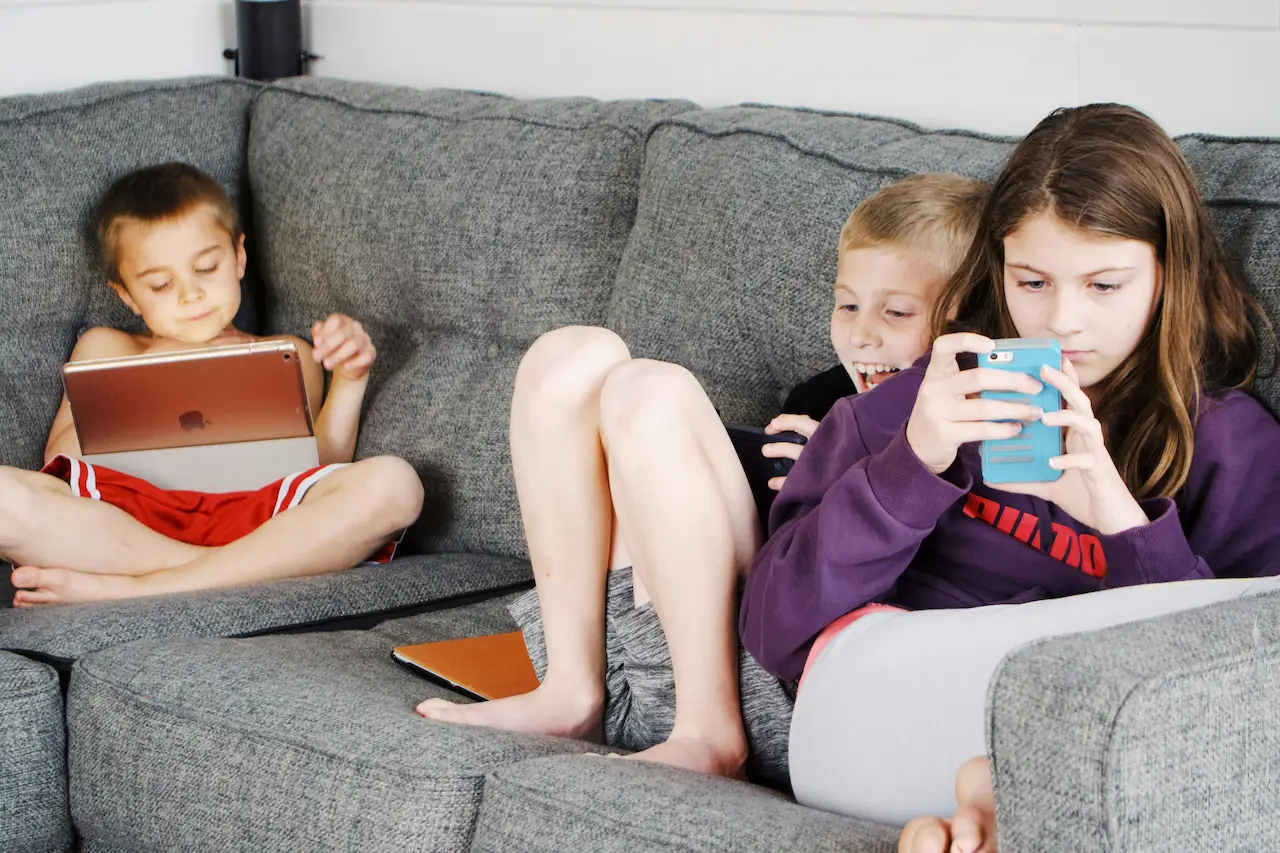
None of us got a manual for raising kids in the smartphone era. We watched screens go from something kids watched in the living room to something they carried in their pockets everywhere — and the guidance from experts never quite kept pace with how fast things changed.
The two-hour rule was the best we had for a while. We set timers. We argued about it. But that rule was built for a world of Saturday morning cartoons and family movie nights. It wasn’t built for TikTok, YouTube autoplay, online gaming, sports betting apps, or a phone that buzzes every few minutes with something engineered to pull your kid back in.
The American Academy of Pediatrics knows this. In January 2026, they officially retired the old framework and replaced it with something that actually fits the world our kids are living in. Not a timer. Not a guilt trip. Something more useful.
First, the brain research — and it’s worth knowing
Before we get to the new guidelines, there’s a study we want to share because it reframes everything.
Researchers in Singapore followed the same group of children from infancy to age 13, using brain imaging at multiple points in their development. What they found in kids who had significant passive screen exposure before age two was striking: the parts of the brain responsible for visual processing and cognitive control matured unusually fast. That sounds like it could be a good thing. It isn’t.
Here’s why: healthy brain development isn’t about speed — it’s about building strong, flexible neural pathways that support complex thinking later on. When those pathways get pushed to develop too quickly, something gets lost. By age 13, the kids with early high screen exposure were taking longer to make decisions on cognitive tasks and showing higher levels of anxiety.
We’re not sharing this to add to anyone’s pile of parenting guilt. We’re sharing it because it helps explain what the AAP’s new guidelines are really getting at: this isn’t about counting minutes anymore. It’s about the kind of interaction our kids are having with screens — and what it’s doing to their developing brains.
And here’s something worth naming for the Parents Standing Together community in particular: the same reward system that gets hijacked by heavy screen use early on — dopamine-driven engagement loops, instant feedback, the pull of “just one more” — is exactly the same system that makes gambling and gaming so hard to walk away from. Understanding how screens shape the brain helps us understand a lot more than just screen time.
So what changed? Meet the 5 Cs.
The AAP’s new framework is built around five core principles— a tool they’re calling the 5 Cs — designed to help families think about media in a more realistic way. It’s not about perfection. It’s about being intentional.
Child. Every kid is different. A child with ADHD or anxiety experiences media differently than a kid who doesn’t. Does your child seek out intense content? Does social media feed their social anxiety, or do they actually find connection there? Does screentime support something they’re passionate about, like art or music? These questions matter more than a number on a timer.
Content. What your child is watching and playing, shapes their relationship with media. Content that’s violent, promotes unrealistic body standards, or models rude behavior tends to show up in kids’ moods and behavior — even when the connection isn’t obvious. Common Sense Media is a solid resource for finding age-appropriate alternatives.
Calm. When your child is stressed, anxious, or struggling to sleep, do they reach for a screen? There’s nothing wrong with a little escape — we all need it. But if a screen is their only coping tool, that’s worth paying attention to. We can help them build other ways to settle their brains and bodies.
Crowding Out. Instead of asking “how much time are they spending online?” ask “what are they not doing?” Is it cutting into sleep? Pulling them away from family time, exercise, or friendships? The digital world is designed with hooks — autoplay, infinite scroll, notifications timed to trigger the brain’s reward response — to keep all of us online longer than we meant to be. Being intentional about when and where devices get used can help families reclaim what matters to them.
Communication. This one might be the most important. Media should be something we can talk about — regularly, openly, without it turning into a fight. When families can have real conversations about what their kids are watching and doing online, kids build digital literacy, and parents are more likely to notice when something’s wrong. You don’t need one big talk. You need a hundred small ones.
What this means for us
The AAP is clear that today’s digital world isn’t something families can manage alone. These platforms are built by smart people whose job is to maximize engagement — and the system is designed largely outside our control as parents. That’s not an excuse to give up. It’s a reason to pay attention differently.
For those of us in the Parents Standing Together community, this framework lands in a particular way. Gaming and online gambling are part of the same ecosystem — same reward loops, same design, same pull. The 5 Cs give us a set of questions that apply whether we’re talking about too much YouTube or a child who can’t stop betting. Start with your child. Ask about the content. Check in on how they cope. Notice what’s getting crowded out. And keep the conversation going — even when it’s uncomfortable.
That’s what we’re here for.
Learn more in Related Resources below.
Next up: Risk Factors for Youth Gambling ➤
Related Resources:
Parents Standing Together provides peer support only – not therapy, medical care, counseling, or legal advice. No professional services or treatment are offered. For any medical, legal, financial, or mental health concerns, please consult a qualified professional. If you or your child is in crisis, call 988 and seek professional help immediately.